The Empire of
The Two Lights

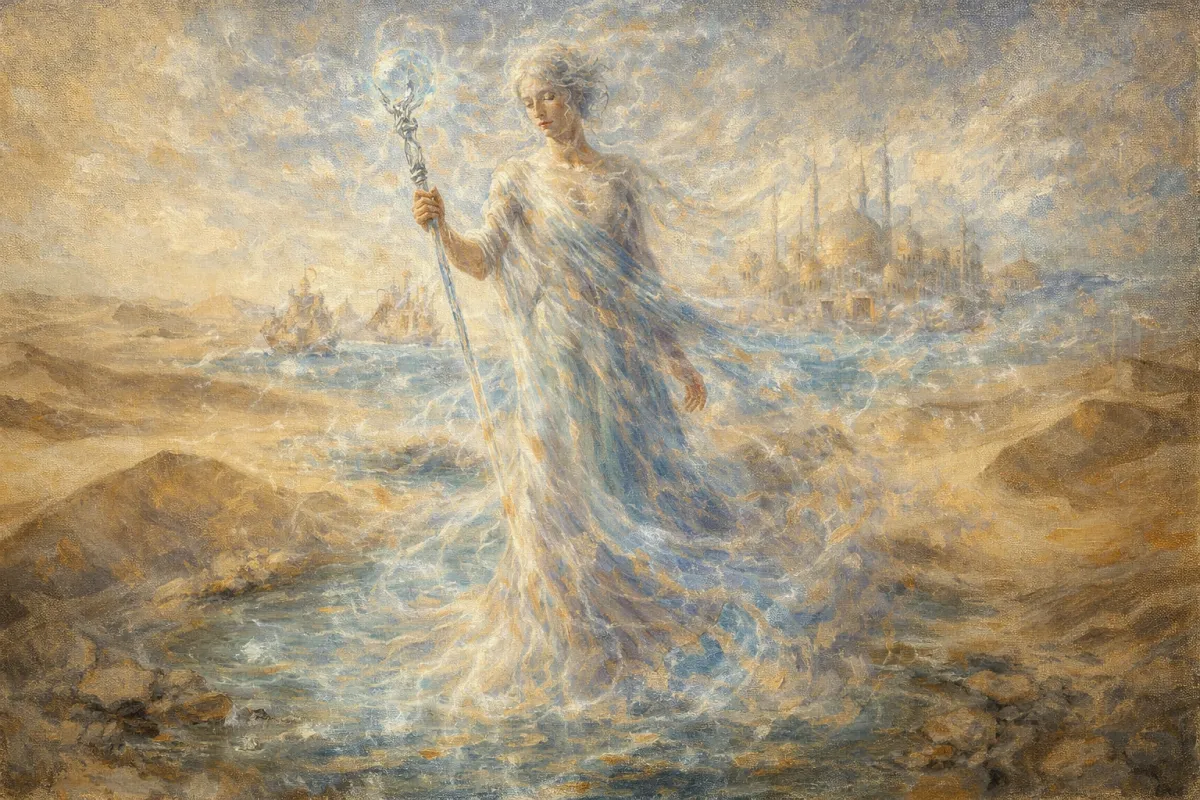
The Priesthood of the Shifting Veil
“Truth is but the Light’s Reflection.”
Overview
The Priesthood of the Shifting Veil is the most elusive and intellectually dangerous faith within the Aurionic world—a religion not of certainty, but of perception, illusion, and layered truth. Where other orders seek to define reality, the Priesthood seeks to unravel it, believing that what is seen is rarely what is real, and what is real is rarely meant to be seen directly.
Rooted in the desert-born culture of the Ubaris Kingdom, the Priesthood reflects a worldview shaped by mirage, heat, shifting horizons, and survival through deception. In lands where distance lies and light bends, the people have learned that clarity can kill as easily as it can save.
To its followers, truth is not a fixed pillar—it is a refraction, changing shape depending on the angle from which it is viewed. Thus, holiness is not found in rigid doctrine or absolute revelation, but in the ability to navigate complexity without losing oneself.
If the Order of the Zenith seeks to expose the world, then the Priesthood of the Shifting Veil seeks to veil it wisely.
Table of Contents
Core Doctrine
Sarab, the Blinding Beauty
The Priesthood venerates Sarab, goddess of Perception, Illumination, and Paradox, known as the Blinding Beauty—a radiance so intense that it obscures as much as it reveals. To her followers, Sarab is not the light that clarifies, but the light that transforms, distorts, and reshapes understanding.
She is the divine embodiment of contradiction:
Light that hides
Truth that shifts
Vision that deceives
In this theology, perception itself is suspect. To see something clearly is not necessarily to understand it correctly. In fact, certainty is often the greatest illusion of all.
Thus, Sarab’s followers cultivate a mindset of constant reevaluation. They do not ask, “What is true?”
They ask, “From which angle is this being seen?”
The Glow That Lingered
The creation myth of the Priesthood differs sharply from the structured narratives of the imperial faiths. It teaches that when Aurion struck the primordial stone, the first burst of incandescence was so intense that it rippled the very fabric of reality. That ripple was Sarab.
Unlike other divine forces that took form as solid entities—stone, flame, or storm—Sarab became the Glow that lingered, the distortion left behind after the initial act of creation. Over time, her followers came to understand that she did not simply illuminate the world—she reshaped it.
She turned desert heat into shimmering illusions of water.
She made emptiness appear as cities.
She hid truth beneath beauty and danger beneath clarity.
Thus, Sarab became known as the Whisper of the Desert, a protector not through force, but through misdirection. She teaches her followers that survival often depends not on strength, but on the ability to remain unseen, misunderstood, or misinterpreted.
The Law of the Prism
The central tenet of the Priesthood is the Law of the Prism:
“Nothing is only what it seems.”
This doctrine rejects all singular interpretations of truth. To believe that something has only one meaning, one perspective, or one outcome is considered a form of blindness.
Followers are trained to:
See multiple interpretations at once
Anticipate hidden motives
Embrace contradiction without confusion
This philosophy produces individuals of extraordinary wit, subtlety, and strategic intelligence. Diplomacy, espionage, and illusion are not merely practical skills—they are sacred disciplines.
To a follower of Sarab, the greatest sin is not deception.
It is naivety.
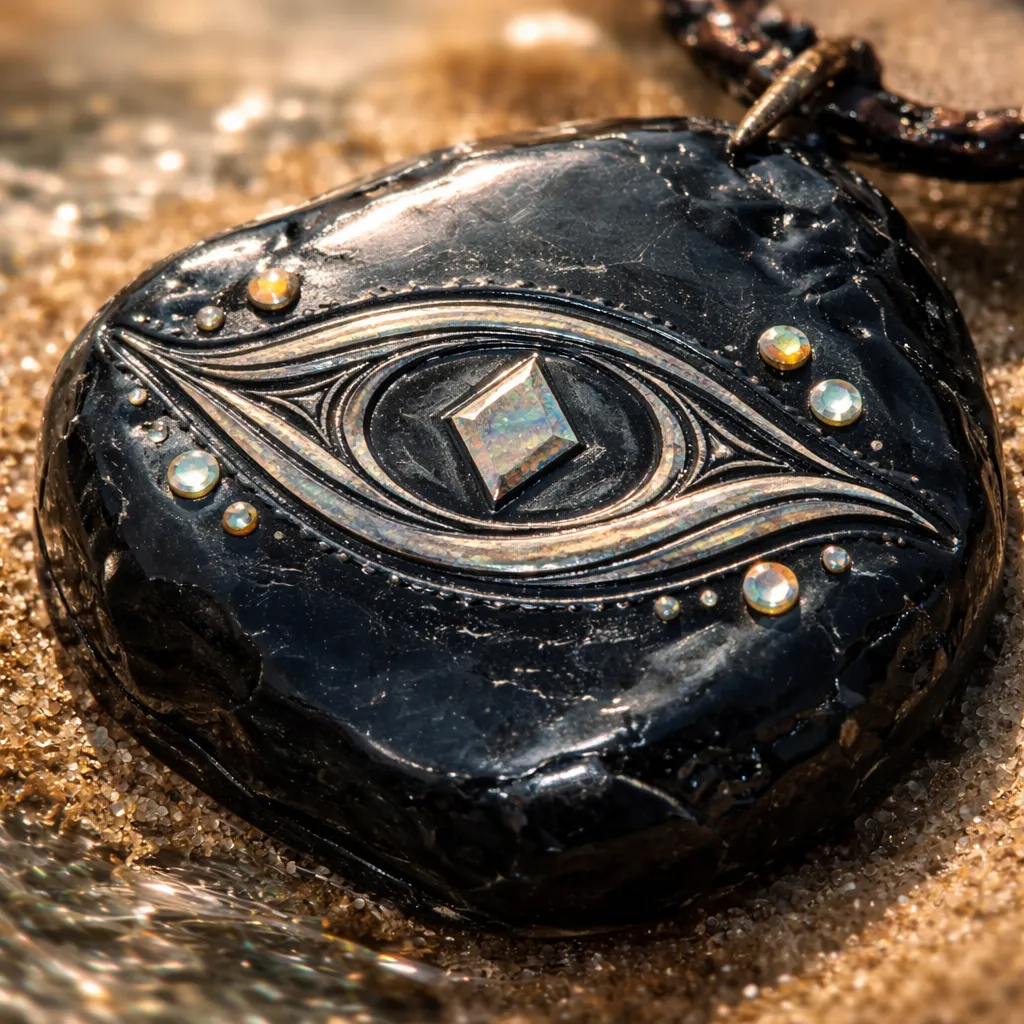
The Refracted Eye (above)
Blessed of Sarab
Mostafa Keshavarz, King of Shifting Sands
Pouya Nasirian, King of Shifting Sands
Naser Sayyad, King of Shifting Sands
Idris al-Ubari, King of Ubaris
Samir al-Ubari, King of Ubaris
Haitham al-Ubari, King of Ubaris
Zayd al-Ubari, Prince of Ubaris
Leaders of the Priesthood
Seats of Worship
Ubaris Kingdom
Current Status: Alive
Table of Contents
Rites & Rituals
The Night of the False Moon
The most sacred celebration of the Priesthood is the Night of the False Moon, held during the peak of desert heat when mirages are strongest.
On this night, identity itself becomes fluid. Citizens wear elaborate, iridescent masks and exchange roles, names, and personas. Through Silent Plays, stories are told without words—only through movement, shadow, and light.
This ritual serves multiple purposes:
It honors Sarab’s nature as the mistress of illusion
It trains participants to read subtle cues beyond speech
It reinforces the idea that identity is not fixed, but performed
By dawn, all masks are removed—but the lesson remains:
what you saw was never the whole truth.
The Covenant of the Hidden Heart
The sacred vow of the faith is the Covenant of the Hidden Heart, a promise to never reveal one’s true intentions to an enemy. It is commonly sworn by diplomats, spies, and agents of Ubaris, transforming deception into a religious duty.
This oath reveals the Priesthood’s moral framework. Honesty is not inherently virtuous. Truth, when exposed without purpose, can become a weapon against oneself. Instead, the faithful are taught to guard their inner selves, revealing only what serves balance and survival.
This makes the Priesthood uniquely suited to political maneuvering. In courts and negotiations, its followers are rarely the loudest—but they are often the most dangerous.
The Vanishing
In death, followers of Sarab do not depart in fire or earth, but in illusion.
Through the rite known as The Vanishing, the deceased are dressed in iridescent silks and placed within towering glass structures called Prisms of Rest. As sunlight moves across the surfaces, reflections distort the body until it appears to flicker and disappear entirely.
It is believed that Sarab has folded the soul into a higher layer of reality, beyond direct perception.
Death, in this faith, is not an ending—it is a transition into a realm where truth can no longer be seen, only inferred.
Table of Contents
Symbols & Sacred Iconography
The Refracted Eye
The primary symbol of the Priesthood is the Refracted Eye—an abstract shape formed by intersecting waves, with a diamond-like pupil that appears to shift depending on perspective.
It represents:
Perception as a fluid experience
The instability of singular truth
The constant shifting of reality
Unlike the rigid symmetry of other religious symbols, the Refracted Eye resists fixation. It invites interpretation—and distrust of that interpretation.
Vestments of the Mirage
Priests wear garments of Iridescent White, Pale Gold, and Water-Blue, often crafted from Sun-Silk, a material that shifts color as it moves.
These robes do not merely signify status—they actively distort the viewer’s perception of the wearer. In motion, a priest may appear closer, farther, or differently shaped than they truly are.
This aesthetic is intentional. To encounter a priest of Sarab is to be reminded that your senses cannot be trusted completely.
The Scepter of Echoes
Among the most powerful artifacts of the faith is the Scepter of Echoes, a staff of clear volcanic glass capable of refracting light into blinding brilliance or projecting false horizons to mislead observers.
The artifact embodies the dual nature of Sarab’s power:
Illumination that reveals
Illusion that protects
It is both tool and symbol—a reminder that power lies not in force alone, but in control over perception.

The Sand Falcon (above)
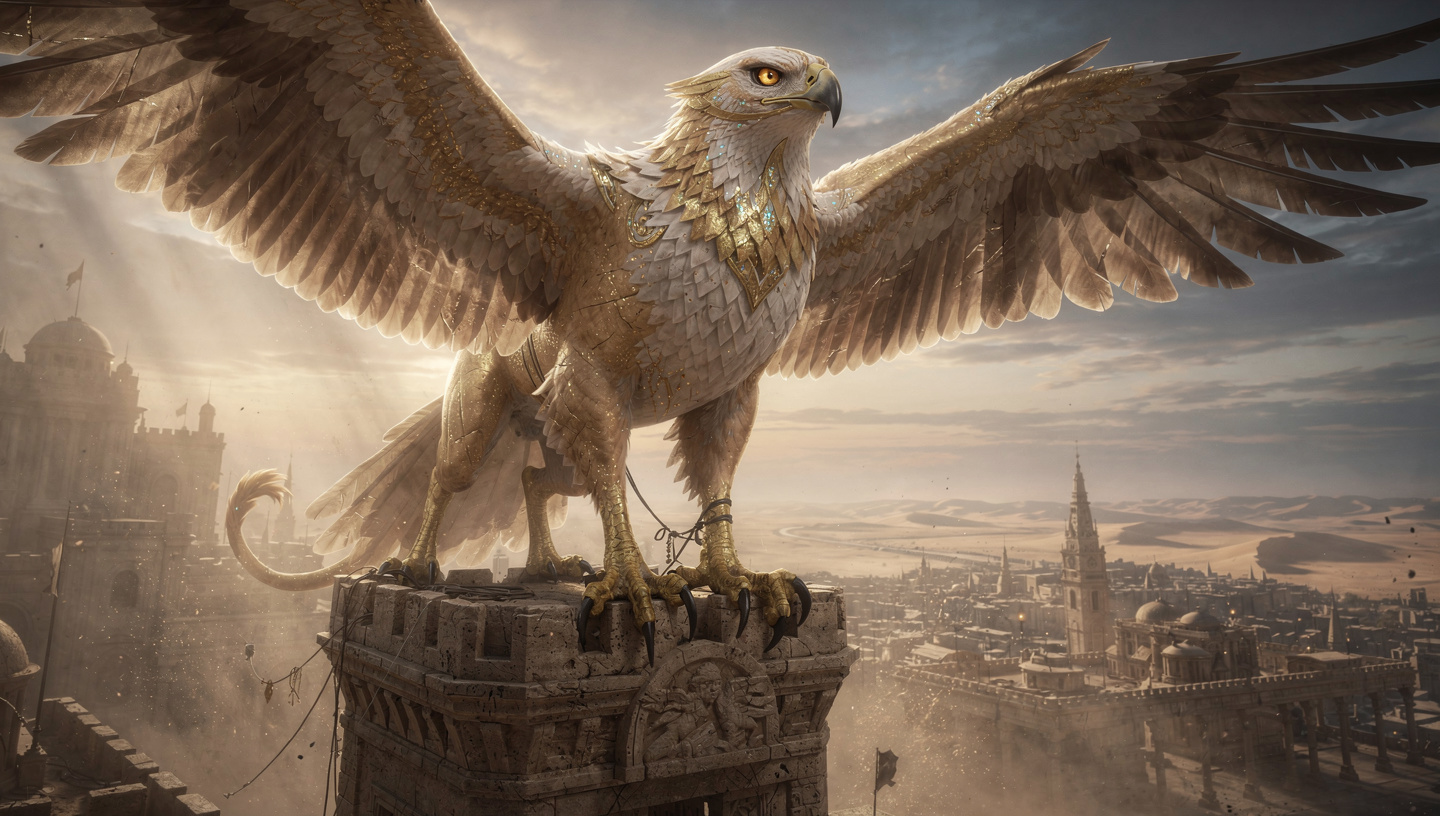
The Great Griffin (above)
Sacred Beasts
The Priesthood’s iconography includes:
The Sand Falcon — precision, vision, and calculated movement
The Griffin — exalted perception, dominance over both sky and earth
The Falcon represents discipline and clarity of focus within complexity. The Griffin represents mastery over layered realities—creatures capable of navigating multiple domains at once.
Table of Contents
The Priesthood & Cultural Influence
The Veiled Ones
The Priesthood is governed by The Veiled Ones, a council of seers who never reveal their faces in public. Their anonymity is not symbolic—it is doctrinal. Identity, once fixed, becomes predictable. Predictability becomes vulnerability.
At their head stands the Grand Illusionist, who serves as both spiritual leader and chief advisor to House al-Ubari. Through this position, the Priesthood exerts subtle but immense influence over the political strategies of the Ubaris Kingdom.
Leadership within this faith is not based on visibility or authority in the traditional sense. It is based on mastery of perception, the ability to see through illusions while crafting them for others.
Centers of Worship
The sacred spaces of the Priesthood are known as Shimmering Fanes—temples constructed of polished glass, mirrored surfaces, and still water.
Within these spaces, reflections multiply endlessly, creating environments where depth, distance, and direction become uncertain. Worshippers are immersed in an experience where perception is constantly challenged, forcing them to confront the instability of their own senses.
These temples are not places of clarity.
They are places of realization through disorientation.
The Fixed-Sin
The greatest taboo of the Priesthood is Stagnant Thought, known as the Fixed-Sin. To believe something is absolute, obvious, or beyond reinterpretation is considered a failure of perception.
This taboo enforces a culture of constant questioning. Certainty is dangerous because it blinds the mind to alternative possibilities. In contrast to other faiths that seek unchanging truths, the Priesthood teaches that truth must remain fluid to remain alive.
View of Other Faiths
The Priesthood views the Order of the Zenith as “Too Bright to See,” criticizing their obsession with absolute truth as a form of blindness created by overwhelming light.
They view the scribes of Sutir as “Collectors of Dead Shadows,” believing that once truth is written and fixed, it loses its living essence and becomes a static echo of what once was.
This perspective highlights the Priesthood’s fundamental opposition to rigid systems. Any belief that claims certainty is, to them, inherently flawed.
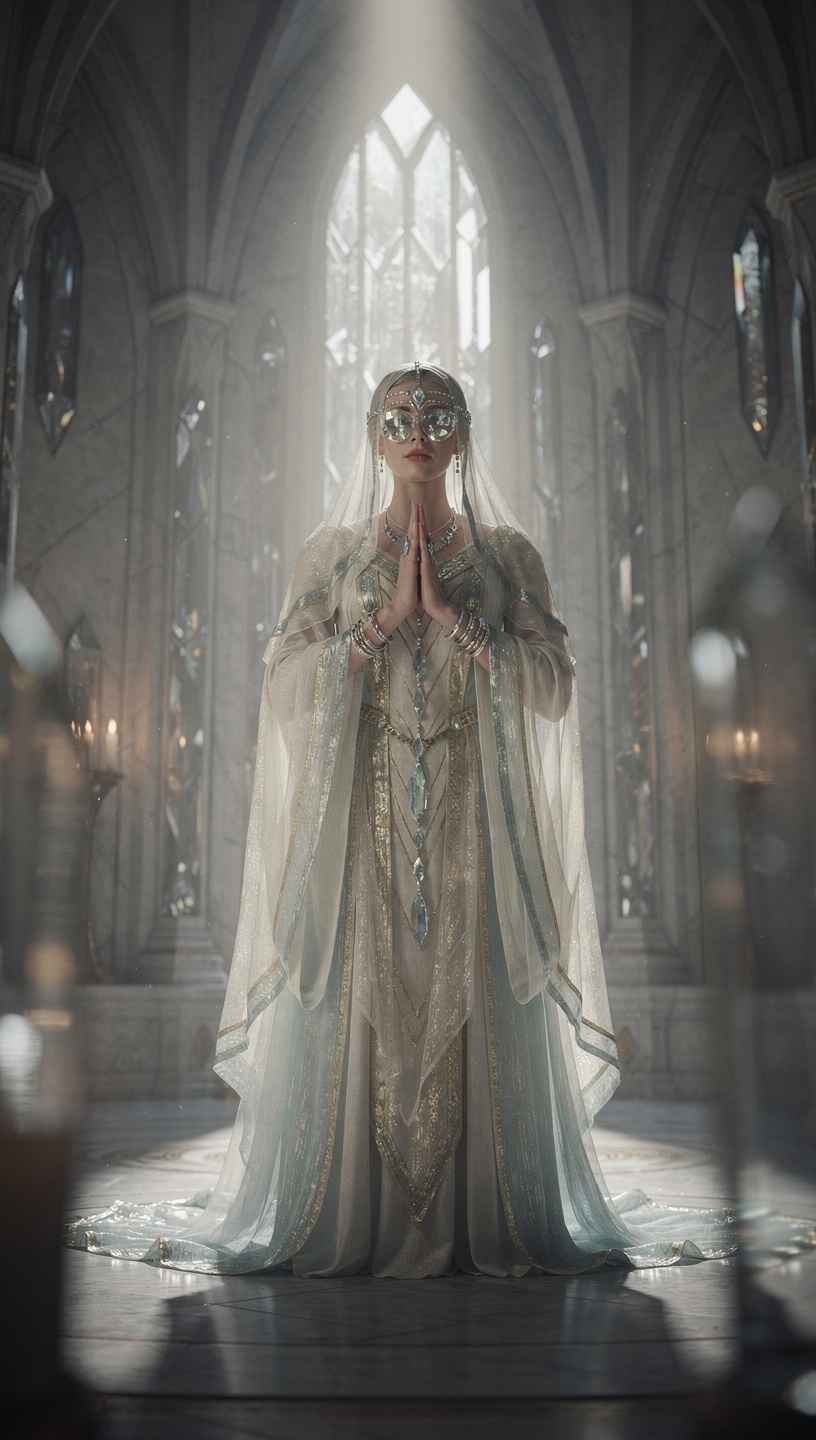
Priestess Robes (above)
Table of Contents
Omens & Prophecy
The Shifting Prisms
The births of 85 AH are interpreted as The Shifting Prisms—seven living lenses through which the future may be refracted. Each girl represents a different possible reality, a different angle through which the light of fate may bend.
This interpretation aligns with the Priesthood’s belief that the future is not fixed. It is a spectrum of possibilities, shaped by perception, action, and interpretation.
The Iron Sky
The most feared prophecy of the faith is the Iron Sky—a future in which the world loses its shimmer, becoming rigid, flat, and unchanging.
In this state:
Illusion ceases to function
Perception becomes fixed
The protective mirage dies
Without illusion, the world is exposed fully to the Naked Darkness of Vefna, with no veil to soften or obscure its presence.
This is not merely the end of deception.
It is the end of protection through perception.
Legacy
The Priesthood of the Shifting Veil endures as one of the most subtle and intellectually profound religions in the Aurionic world. It teaches that truth is not a weapon to be wielded blindly, but a force to be shaped, refracted, and understood in its many forms.
To some, it is dangerous—too fluid, too deceptive, too willing to obscure what others seek to reveal.
To others, it is essential—the only faith that understands that clarity alone can destroy as easily as darkness.
In a world of empires, wars, and divine forces, the Priesthood offers a different kind of power:
The power to see what others miss.
The power to hide what others expose.
The power to survive within the illusion.
For in the light of Sarab, nothing is ever simply what it appears to be.
𖤓 NOTICE OF IMPERIAL ACCESS 𖤓
This digital codex is maintained by the Silent Scribes of the Aurionic Lyceum. All records, genealogies, and maps contained herein are the property of the Archive of Ichnusa and are preserved for the eyes of the Imperial Household and authorized scholars. By proceeding, you acknowledge the sanctity of the "Silent Truth." May Sutir guide your quill.
Direct all inquiries to the Office of the Grand Maester.
Copyright © 2026 Brilliance Entertainment. All rights reserved.