The Empire of
The Two Lights
The Circle of the Living Root
“As Below, So Above. As the Rot, So the Bloom.”
Overview
The Circle of the Living Root is the oldest and most primal faith still practiced within the known world—a religion not of crowns, towers, or written law, but of soil, decay, and renewal. Where the great empires impose order from above, the Circle draws its authority from below, from the unseen networks of life that bind root to root, bone to earth, and past to future.
It is the faith of those who live beyond the reach of imperial architecture: the deep forests of Coill Mór, the whispering glades of Vildamannaland, and the wild places where civilization fades into something older and more patient. To its followers, the world is not governed by decree, nor sustained by light alone—it is sustained by cycles, by the quiet exchange between what lives, what dies, and what grows again.
The Circle does not deny the power of the sun, the forge, or the night. It simply reminds the world of a truth those powers often forget:
Everything returns to the soil.
If the Order of the Zenith is the faith of law, then the Circle of the Living Root is the faith of continuity.
Table of Contents
Core Doctrine
Foraoise, the Green Breath
The Circle venerates Foraoise, goddess of Balance, Reciprocity, and Vitality, known as the Green Breath—the living force that moves through root, leaf, decay, and rebirth. She is not a distant ruler nor a judging light. She is present, immediate, and constant, woven into every living system that sustains the world.
To her followers, Foraoise is the embodiment of a simple but unbreakable law:
life does not end—it transforms.
She governs the wild places where imperial law cannot reach, not through command, but through balance. Predation feeds growth. Death nourishes life. Rot is not corruption—it is preparation.
In this theology, nothing is wasted unless it is removed from the cycle.
The Twin Roots of Creation
The Circle’s creation myth speaks not of a single divine act, but of a division of life-force. When Aurion’s first strike ignited the world, its heat did not remain in the heavens. It bled downward—into soil and sea—where it split into two living forces:
Kymopoleia, the light of the deep tides
Foraoise, the light of the deep roots
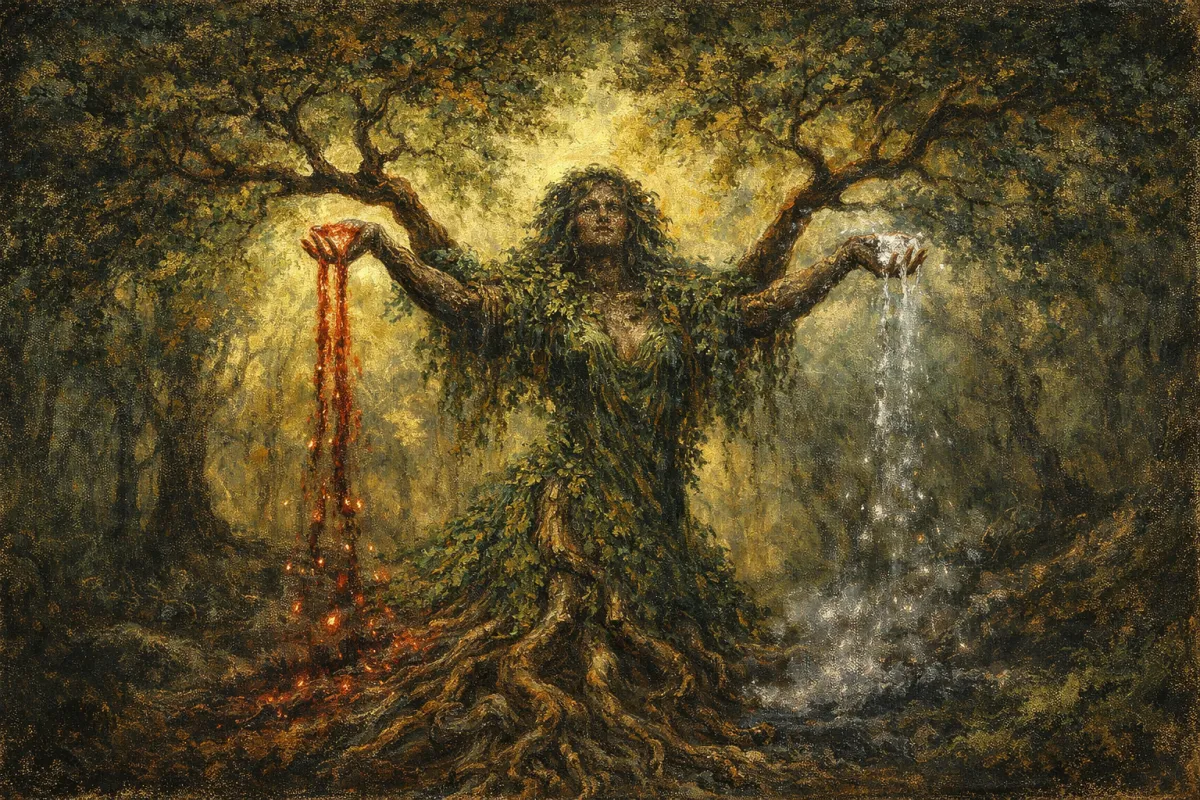
While one sister descended into the ocean’s depths, Foraoise remained upon the land, catching the scattered sparks of creation and transforming them into sap, growth, and living systems. Over time, her form became indistinguishable from the forests themselves. The glowing veins of fungi beneath the earth became her arteries. The roots of ancient trees became her limbs.
Thus, Foraoise is not simply a goddess of nature.
She is nature in its most interconnected form.
This myth reinforces the Circle’s belief that life is not created in isolation, but in networks—woven systems of exchange that must remain intact for the world to endure.
The Law of the Tithe
The central tenet of the Circle is the Law of the Tithe:
“Nothing is taken that is not returned.”
This law governs every aspect of life within the faith. To take from the land—whether tree, animal, or resource—is to incur a debt. That debt must be repaid, either through offering, renewal, or sacrifice.
Unlike the rigid commandments of imperial religions, this law is not enforced through punishment from above. It is enforced through consequence. If the balance is broken, the land itself will respond—through famine, sickness, or the slow withdrawal of vitality.
To the Circle, morality is not abstract.
It is ecological.
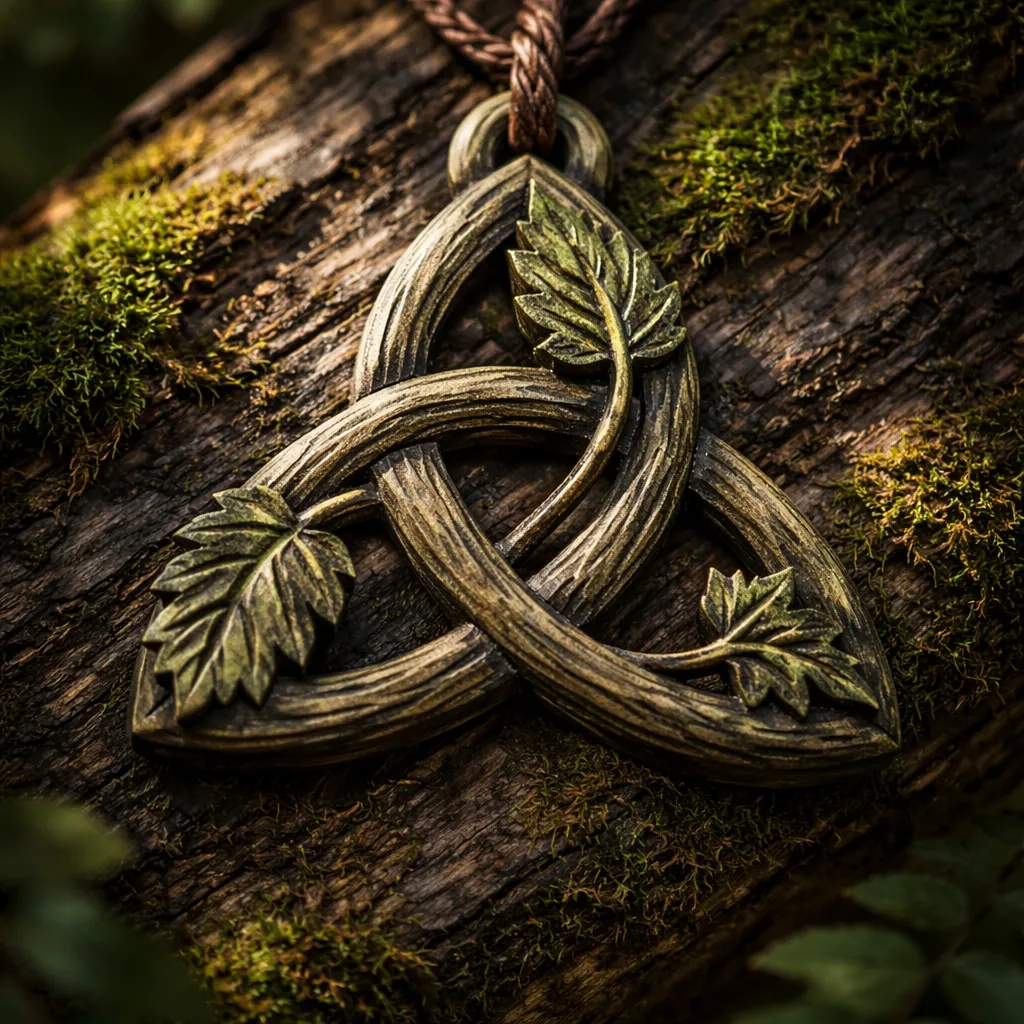
The Living Knot (above)
Blessed of Foraoise
Eithne ni Foraoise, Queen of Coill Mór
Sadhbh ni Foraoise, Queen of Coill Mór
Maeve ni Foraoise, Queen of Coill Mór
Morrigan ni Foraoise, Queen of Coill Mór
Rhiannon of Coill Mór, Prism of Coill Mór
Leaders of the Circle
Eithne ni Foraoise, Root-Speaker
Elestina of Verdant, Root-Speaker
Breya of the Cliffs, Root-Speaker
Morrigan ni Foraoise, Root-Speaker
Rhiannon of Coill Mór, Root-Speaker
Seats of Worship
Coill Mór Kingdom
Current Status: Alive
Table of Contents
Rites & Rituals
The Bloom-Awakening
The holiest celebration of the Circle is the Bloom-Awakening, held when the first green shoots emerge from beneath winter snow. This marks the return of the Earth-Light—the visible sign that the cycle has continued unbroken.
Followers gather in the deepest groves to perform the rite known as Feeding the Roots, offering fermented honey, organic matter, and remnants of past harvests back to the soil.
This ritual is not symbolic—it is participatory. The faithful do not merely celebrate renewal; they contribute to it, ensuring that what was taken in the previous year is returned in substance.
The Bloom-Awakening affirms the Circle’s core belief: growth is not a miracle—it is a responsibility.
The Root-Oath
The sacred vow of the Circle is the Root-Oath, a bond of profound spiritual and physical significance. When two individuals swear this oath, they believe their lifeforce becomes intertwined, as though their roots have grown together beneath the earth.
To break this oath is not merely betrayal—it is a rupture of the natural order. It is said that the earth itself will reject the oathbreaker, turning against them as though they no longer belong within the cycle.
This vow reflects the Circle’s understanding of connection: relationships are not agreements—they are living bonds.
The Great Replanting
In death, followers of Foraoise do not seek separation from the world, but reintegration into it. Through the rite known as the Great Replanting, the deceased are placed at the base of a young tree, wrapped in moss and lichen.
As the body decomposes, it nourishes the soil, feeding the tree that grows above it. It is believed that the soul ascends through the trunk, becoming a guardian spirit of the grove.
This ritual expresses one of the Circle’s deepest truths: death is not an end—it is a return of resources.
Where other faiths seek to preserve the body or release the soul, the Circle ensures both remain part of the living system.
Table of Contents
Symbols & Sacred Iconography
The Living Knot
The primary symbol of the Circle is the Living Knot, formed by three interlocking roots that create a circular triquetra, each ending in a distinct leaf: Oak, Ash, and Thorn.
It represents:
Interconnection of all life
The balance between growth, decay, and renewal
The cyclical nature of existence
Unlike rigid geometric symbols, the Living Knot suggests motion and entanglement—life as a system rather than a structure.
Vestments of the Earth
Followers wear Moss Green, Bark Brown, and Autumn Copper, blending seamlessly into the natural world. During night rituals, they adorn their skin with glowing sigils made from Phosphor-Paint, derived from forest fungi.
This practice reflects their belief that the body itself is part of the environment, not separate from it. Ritual does not elevate them above nature—it draws them deeper into it.
The Staff of the First Sprout
The Circle’s most sacred artifact is the Staff of the First Sprout, an ancient wooden staff said to still bear living leaves. It is believed to sense the health of the land and detect the spread of the Void-Blight, the creeping influence of Vefna.
This relic is not a weapon or symbol of dominion. It is a tool of listening—a conduit through which the faithful may understand the condition of the world beneath their feet.
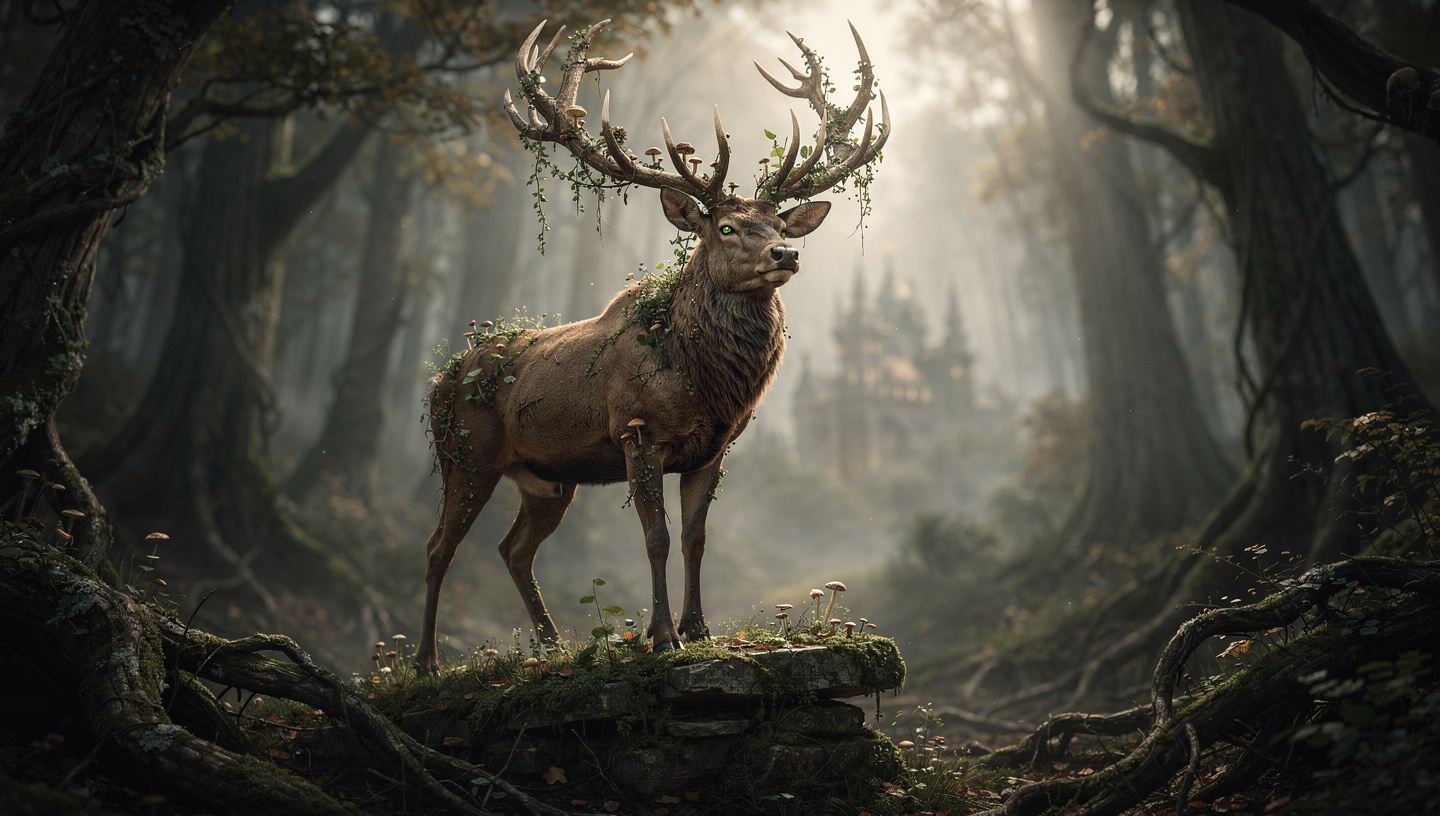
The Forest Stag (above)
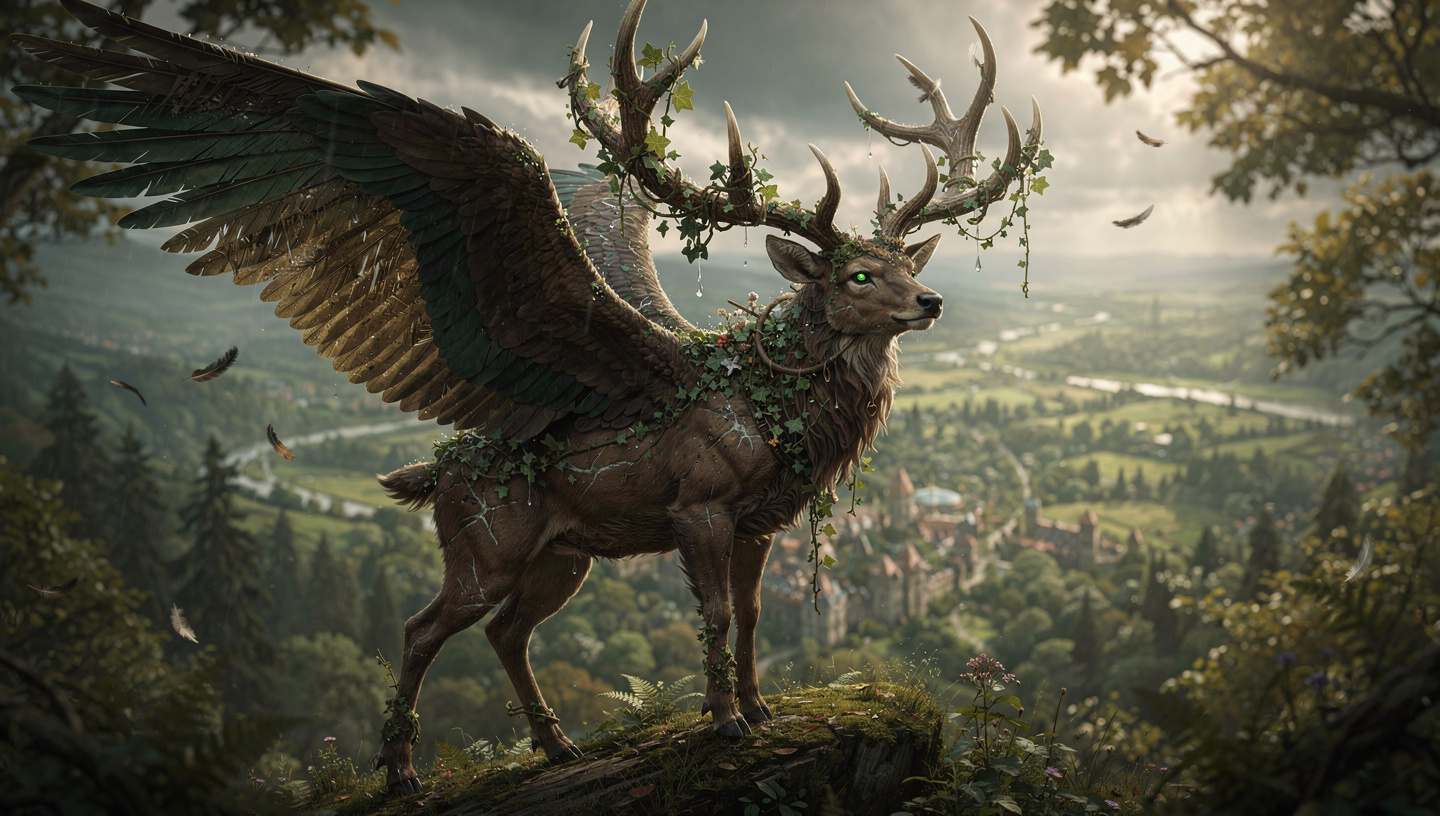
The Great Peryton (above)
Sacred Beasts
The Circle’s iconography features:
The Forest Stag — renewal, growth, and the cyclical shedding and regrowth of life
The Peryton — a more mystical creature, representing the deeper, unseen forces of the wild
The Stag embodies the visible cycle. The Peryton embodies the hidden one.
Table of Contents
The Priesthood & Cultural Influence
The Grove-Wardens
The Circle is guided by the Grove-Wardens, a decentralized body of elders, healers, and druids who maintain the balance of their respective regions. There is no rigid hierarchy, no central throne. Authority is earned through wisdom, experience, and connection to the land.
At the center of this loose structure stands the Root-Speaker, a figure believed to hear the collective heartbeat of the forest itself. Their role is not to command, but to interpret—to listen to the rhythms of the world and guide others accordingly.
This structure reflects the Circle’s core philosophy:
order emerges from balance, not control.
Centers of Worship
The sacred spaces of the Circle are the Coill Mór Groves and the Whispering Glades of Vildamannaland, locations where the world’s natural energies—often described as ley lines—are closest to the surface.
These are not constructed temples. They are discovered, protected, and maintained. Worship takes place within living environments, reinforcing the belief that divinity is not housed in buildings, but in the world itself.
The Grey-Sin
The greatest taboo of the Circle is Waste, known as the Grey-Sin. To kill without purpose, to burn without need, or to pollute the land is considered a direct attack on Foraoise herself.
This taboo enforces a strict ethic of sustainability. Every action must be justified within the cycle. Anything that breaks the chain of renewal is not merely inefficient—it is sacrilegious.
View of Other Faiths
The Circle views the Order of the Zenith as “Sun-Sick,” followers who have forgotten that light exists to serve the soil, not dominate it.
They regard Kymopoleia with bittersweet reverence, seeing her as the Lost Sister who chose the depths over the roots.
These perspectives reveal the Circle’s broader worldview:
all forces are part of the system—but some have lost their balance.
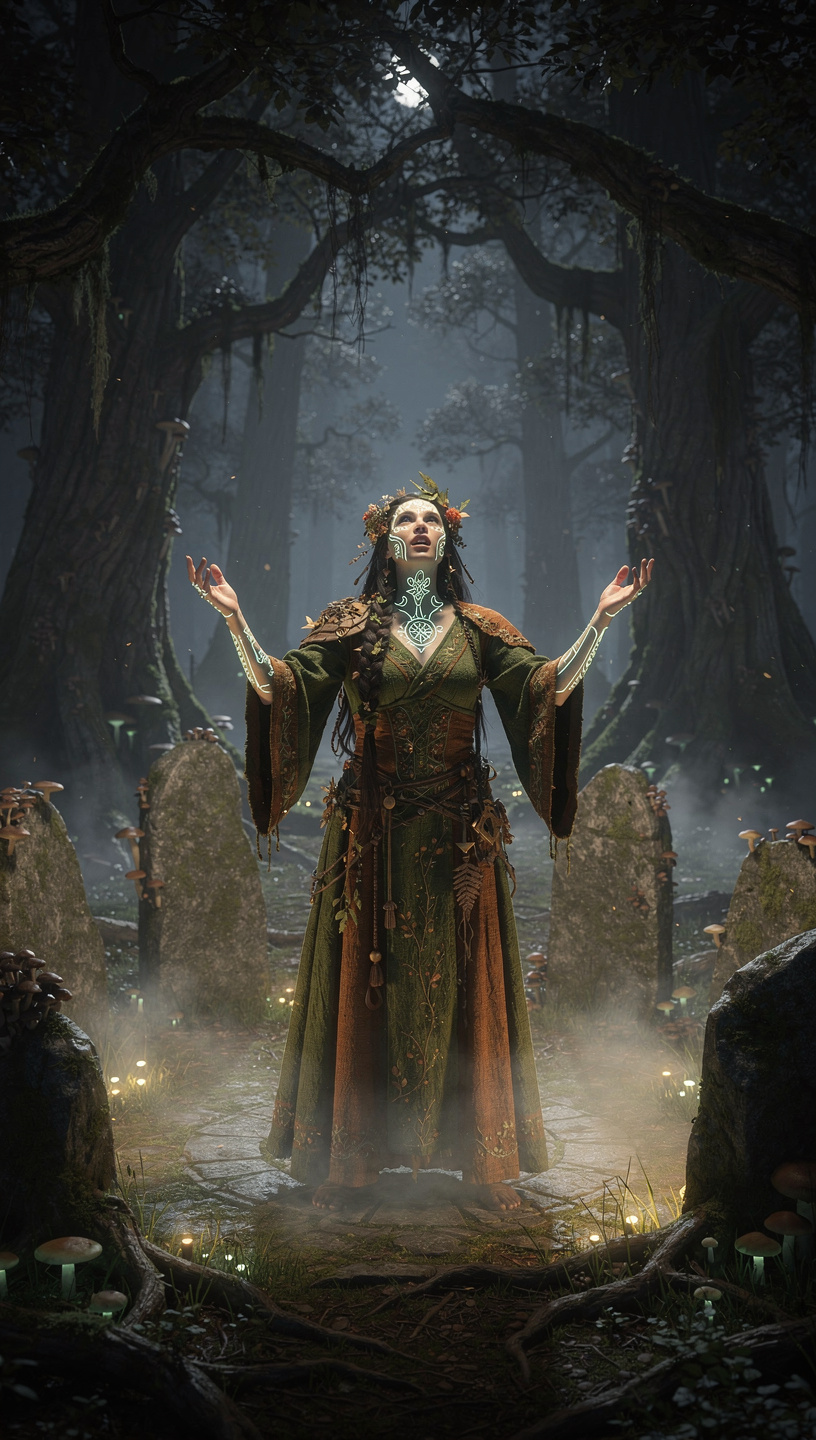
Grove-Warden Robes (above)
Table of Contents
Omens & Prophecy
The Fruition
The births of 85 AH are interpreted as The Fruition—the emergence of seeds destined to grow into a new world-tree.
To the Circle, these children are not anomalies or threats. They are signs that the current world has reached the end of its natural cycle, and something new is preparing to take root.
The Iron-Blight
The most feared prophecy of the Circle is the Iron-Blight. It foretells a time when trees weep sap of liquid silver and roots turn to cold iron. In this state, Foraoise has died, and the living world becomes rigid, lifeless, and incapable of renewal.
This is not merely environmental collapse—it is the death of the cycle itself. Without growth and decay, the world becomes static, sterile, and ultimately consumed by the Void.
It is the end of life not through destruction, but through cessation.
Legacy
The Circle of the Living Root endures as one of the most ancient and resilient faiths in the world—a quiet but unyielding reminder that beneath every empire, every wall, every forge, and every throne lies the soil that sustains them all.
To some, it is primitive.
To others, it is sacred.
But to those who understand its truth, it is something far more profound:
The rhythm that underlies all existence.
The unseen network that binds life to life.
The promise that nothing truly ends—only changes form.
For in the eyes of Foraoise, the world is not a thing to be ruled.
It is a thing to be kept alive.
𖤓 NOTICE OF IMPERIAL ACCESS 𖤓
This digital codex is maintained by the Silent Scribes of the Aurionic Lyceum. All records, genealogies, and maps contained herein are the property of the Archive of Ichnusa and are preserved for the eyes of the Imperial Household and authorized scholars. By proceeding, you acknowledge the sanctity of the "Silent Truth." May Sutir guide your quill.
Direct all inquiries to the Office of the Grand Maester.
Copyright © 2026 Brilliance Entertainment. All rights reserved.