The Empire of
The Two Lights
The Aurionic Pantheon
“From the One, All Light. From the Light, All Law.”
The Aurionic Pantheon is the divine foundation upon which the cultures, laws, and conflicts of the Empire of the Two Lights are built. At its center stands the duality of creation itself: light and shadow, revelation and concealment, order and transformation. From the first strike of Aurion upon the formless stone within the Sjónlauss—the Sightless Void—the gods emerged not as distant beings, but as living principles that shape every aspect of existence. Each deity represents not merely an element of the world, but a philosophy of how that world should be understood, governed, and endured.
Though the Empire outwardly elevates Aurion above all others, the full pantheon remains deeply embedded in the identities of its kingdoms. From the quiet endurance of night to the roaring fury of storm, from the rooted patience of the forest to the shifting illusions of light itself, the gods are not separate from the world—they are the world, expressed through divine form. Together, they form a cosmic balance, one that is constantly tested by mortal ambition, faith, and the ever-present tension between unity and individuality.
Table of Contents
Table of Contents
Aurion
Aurion, the Lord of the Light, stands as the supreme creator and central authority of the pantheon, the divine force from which all other gods originate. He is not merely a bringer of illumination, but the embodiment of Absolute Truth and Immutable Law, a god whose light does not comfort—it judges. To stand within his radiance is to be seen fully, stripped of illusion, and measured against the unyielding standard of perfection. Associated with the sun at its zenith, the phoenix, and the lion, Aurion represents both creation and destruction, for his light gives life even as it consumes what is unworthy. In the Aurionic Empire, he is worshipped not just as a god, but as the divine justification for order, conquest, and unity beneath a single, unblinking truth. He is the husband of Aurah, ruling over civilization, light, and order with her.
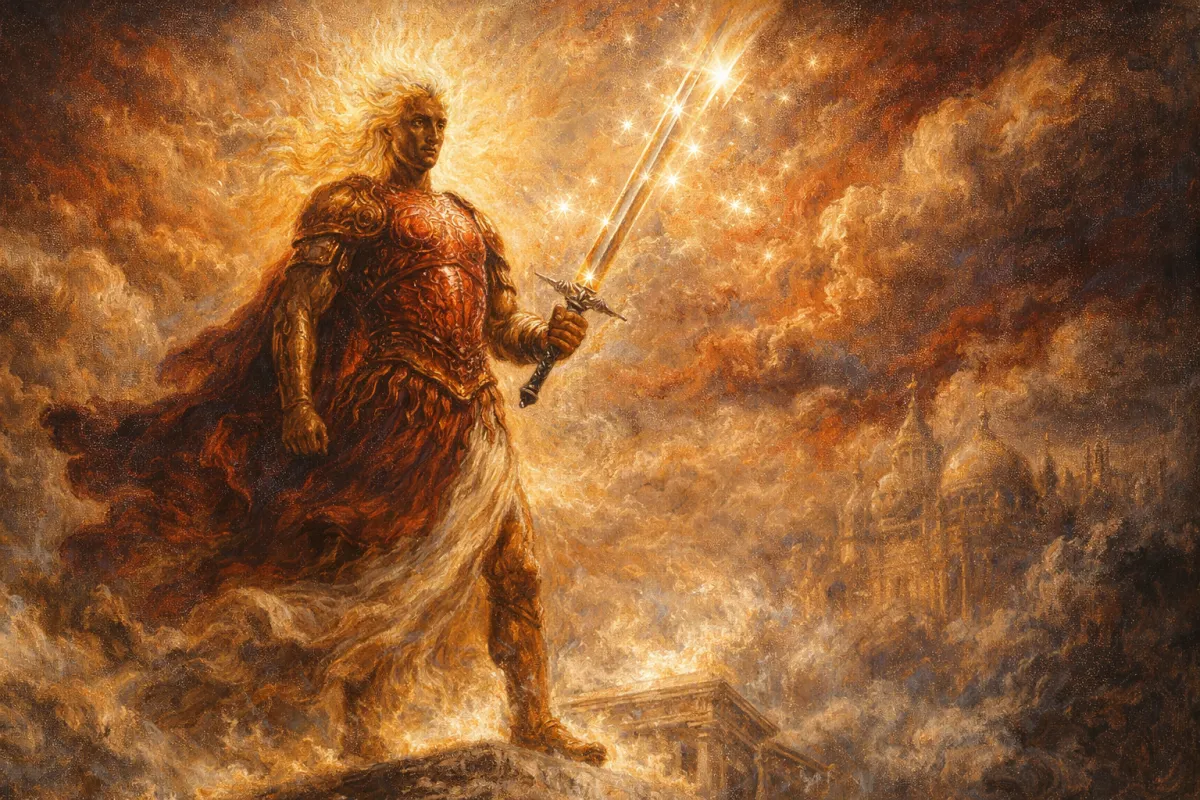
Table of Contents
Aurah
Aurah, the Lady of the Dawn, is the mother of the pantheon and the divine counterbalance to Aurion’s overwhelming radiance. Where his light burns, hers softens; where he reveals, she guides. Born in the moment after Aurion’s first strike, she embodies Renewal, Hope, and Mediation—the sacred threshold between destruction and creation. Aurah is not defined by power alone, but by transition, existing in the fragile space where endings become beginnings and chaos is shaped into life. To her followers, she is the necessary mercy that prevents the world from being consumed by absolute judgment, a reminder that truth without compassion can become ruin. She is the wife of Aurion, ruling over civilization, light, and order with her.
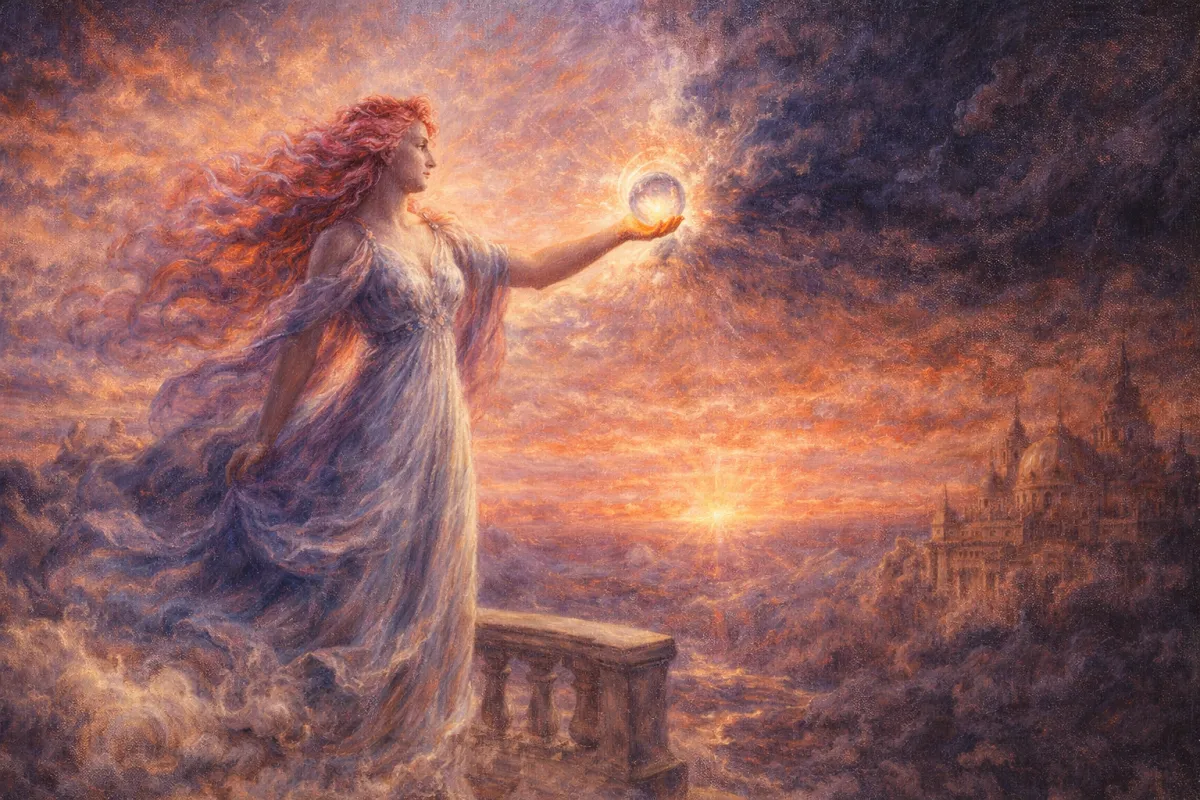
Table of Contents
Vetr
Vetr, the Lord of the Night, is the first son of Aurion and Aurah and the eternal sentinel at the edge of the known world. He governs the domains of the Moon, Night, Endurance, and Vigilance, embodying the quiet strength required to stand where light fails. Unlike many deities of darkness, Vetr is not a symbol of evil, but of necessary silence—the stillness that allows survival in a hostile world. He is the guardian of boundaries, the one who holds back the unknown and ensures that the fragile order of creation is not consumed by the void beyond. In him, darkness is not corruption, but protection—the space where the world is defended, unseen and uncelebrated. He is the husband of Sarab, ruling over night, death, and mystery with her.
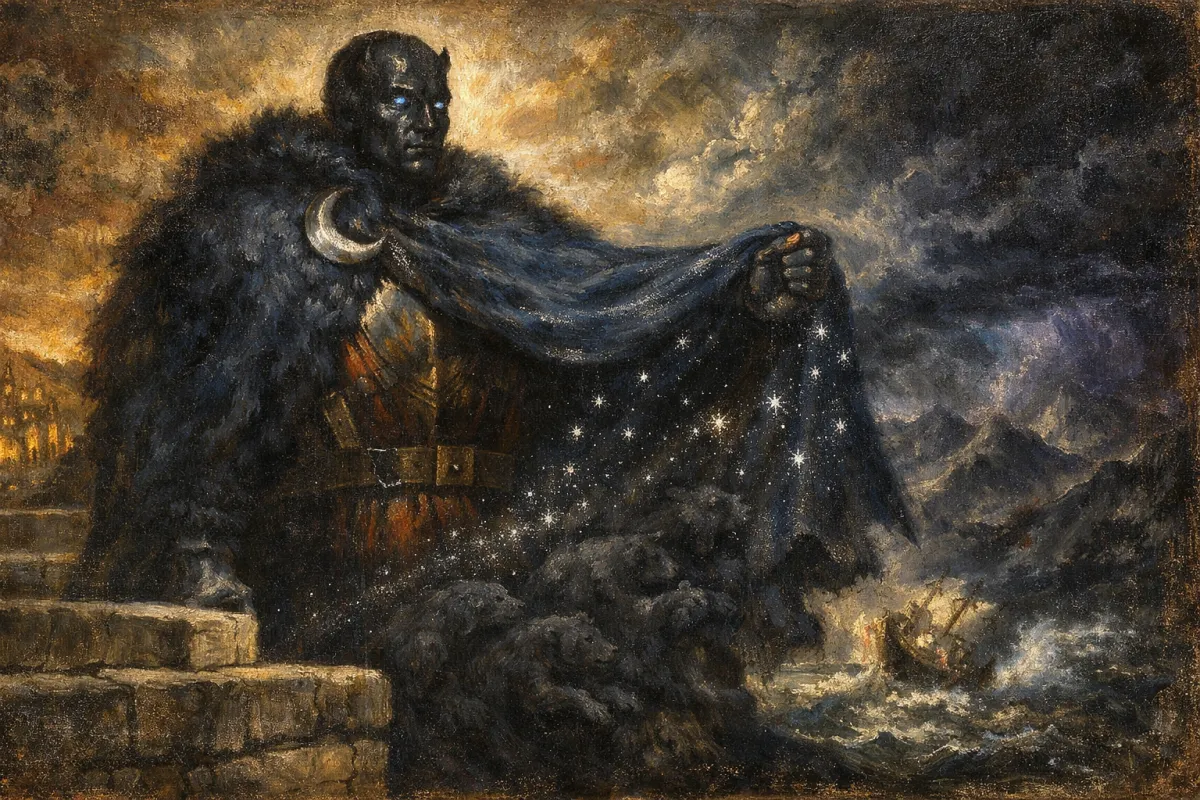
Table of Contents
Sarab
Sarab, the Mirage, is a created of Aurion and Aurah, a goddess whose nature defies simple understanding. She governs Love, Beauty, Perception, and Paradox, embodying a form of light that does not clarify, but transforms. Known as the Blinding Beauty, her radiance reshapes reality, bending truth into layered reflections that must be interpreted rather than accepted. To her followers, certainty is a flaw, and understanding is found not in what is seen, but in what lies beneath appearances. Sarab represents the dangerous and seductive truth that reality itself is not fixed, but fluid—forever shifting depending on how it is perceived. She is the wife of Vetr, ruling over night, death, and mystery with him.
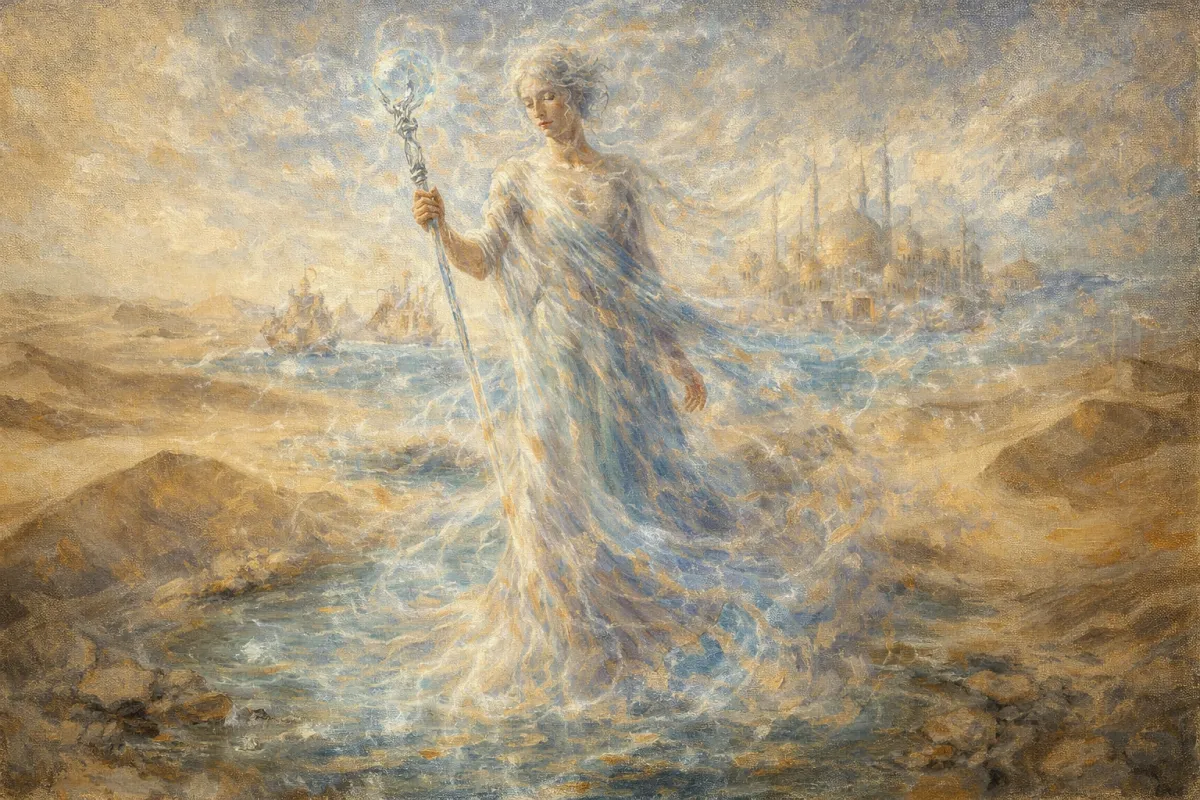
Table of Contents
Grom
Grom, the Thunderer, is the second son of Aurion and Aurah and the embodiment of action, force, and transformation. As the Voice of the Strike, he represents the moment where potential becomes reality—the instant where the world is shaped through will and effort. Lightning, in his domain, is not merely a symbol of power, but the purest tool of creation: sudden, decisive, and irreversible. Thunder is the echo of the cosmic forge, a reminder that existence itself is still being hammered into form. To his followers, Grom is not worshipped through silence or reflection, but through labor, creation, and the relentless pursuit of strength. He is the husband of Foraoise, ruling over storms, wilderness, and growth with her.
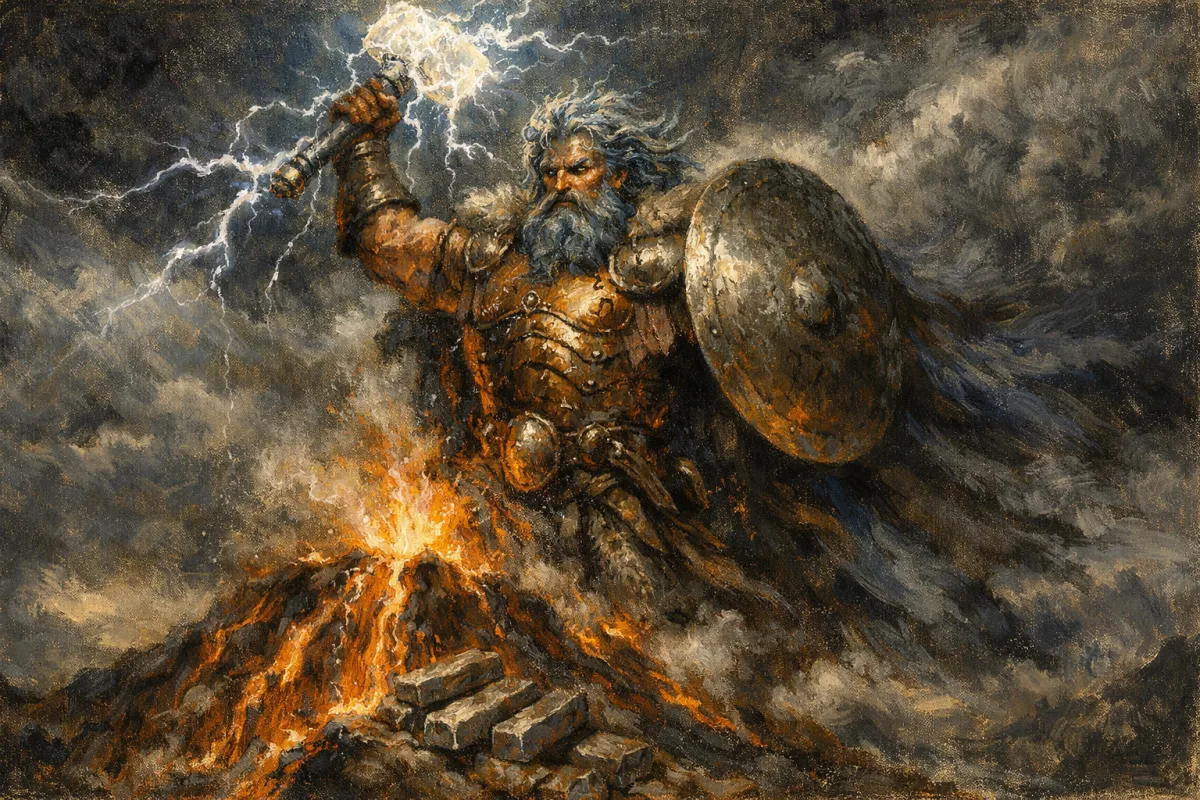
Table of Contents
Foraoise
Foraoise, the Keeper of the Forest, is one of the twin daughters of Aurion and Aurah and the living embodiment of the natural world. As the Green Breath, she governs Earth, Balance, Reciprocity, and Vitality, existing within every cycle of growth, decay, and renewal. She is not distant or abstract, but immediate—present in the soil, the roots, and the quiet persistence of life itself. To her followers, power is not seized but sustained, and nothing may be taken without being returned. Foraoise represents a truth older than empire: that all things, no matter how mighty, must eventually return to the earth. She is the wife of Grom, ruling over storms, wilderness, and growth with him.
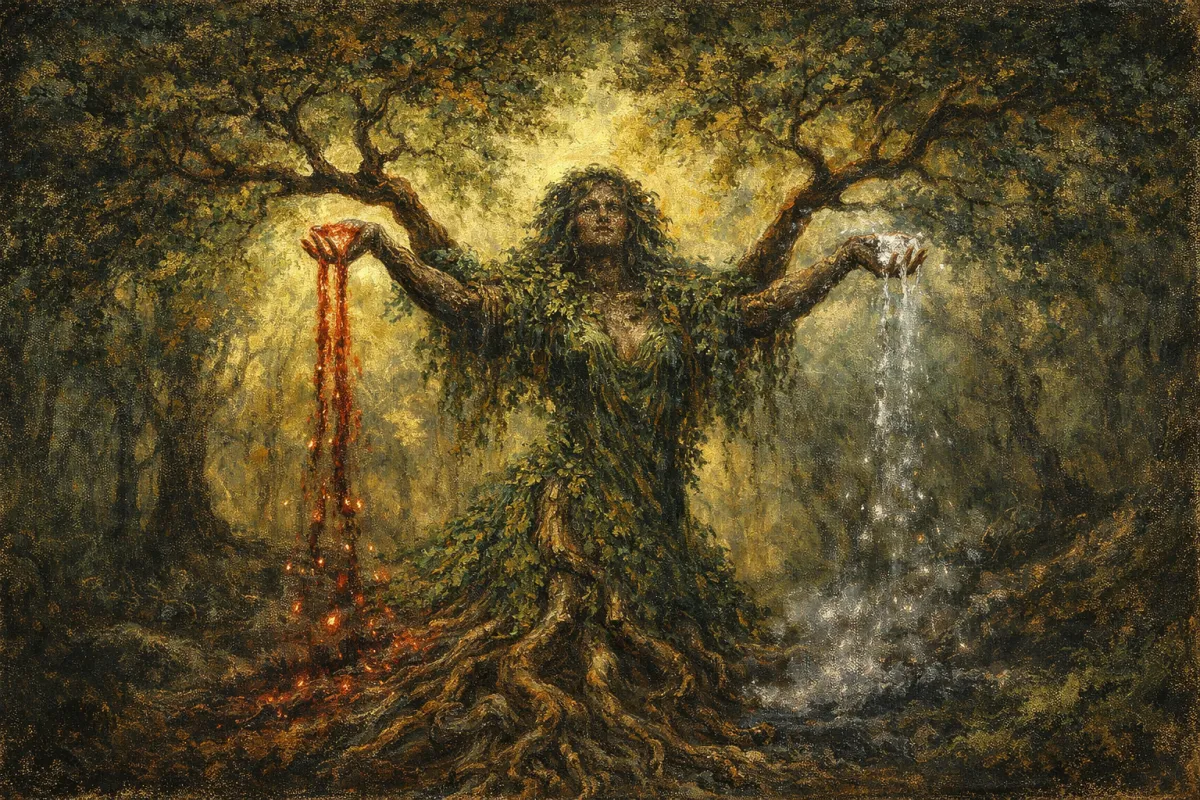
Table of Contents
Kymopoleia
Kymopoleia, the Concealer, is the twin sister of Foraoise and the sovereign of the oceans, depths, and hidden places of the world. Known as the Cold Light of the deep, she governs Mystery, Gravity, and Concealment—the forces that pull all things downward into silence. Unlike the visible power of the sun or the tangible presence of the land, Kymopoleia’s domain is unseen, felt rather than witnessed. She represents the truths that are too heavy to exist in the open, the secrets that must be buried to preserve balance. In her depths, nothing is lost—only hidden, waiting beneath the surface where light cannot reach. She is the wife of [ERASED], ruling over fire, sea, creation, and destruction with him.
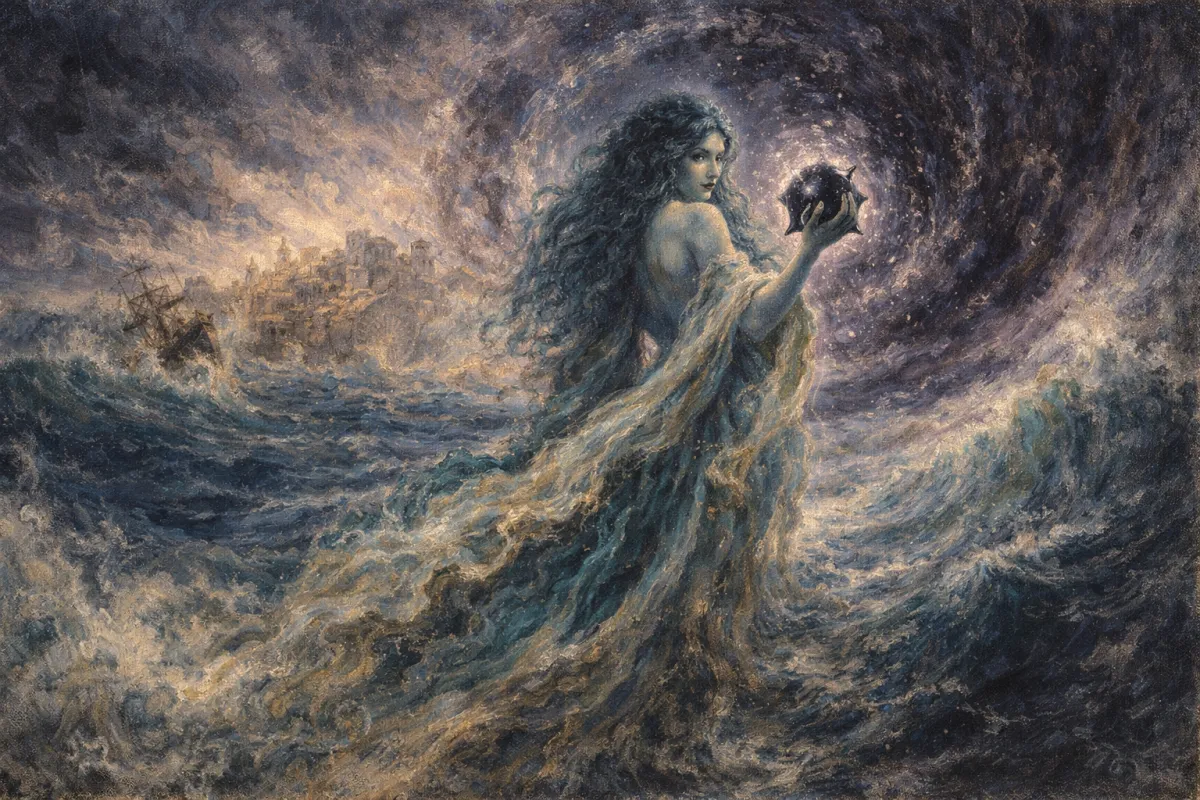
Table of Contents
Sutir
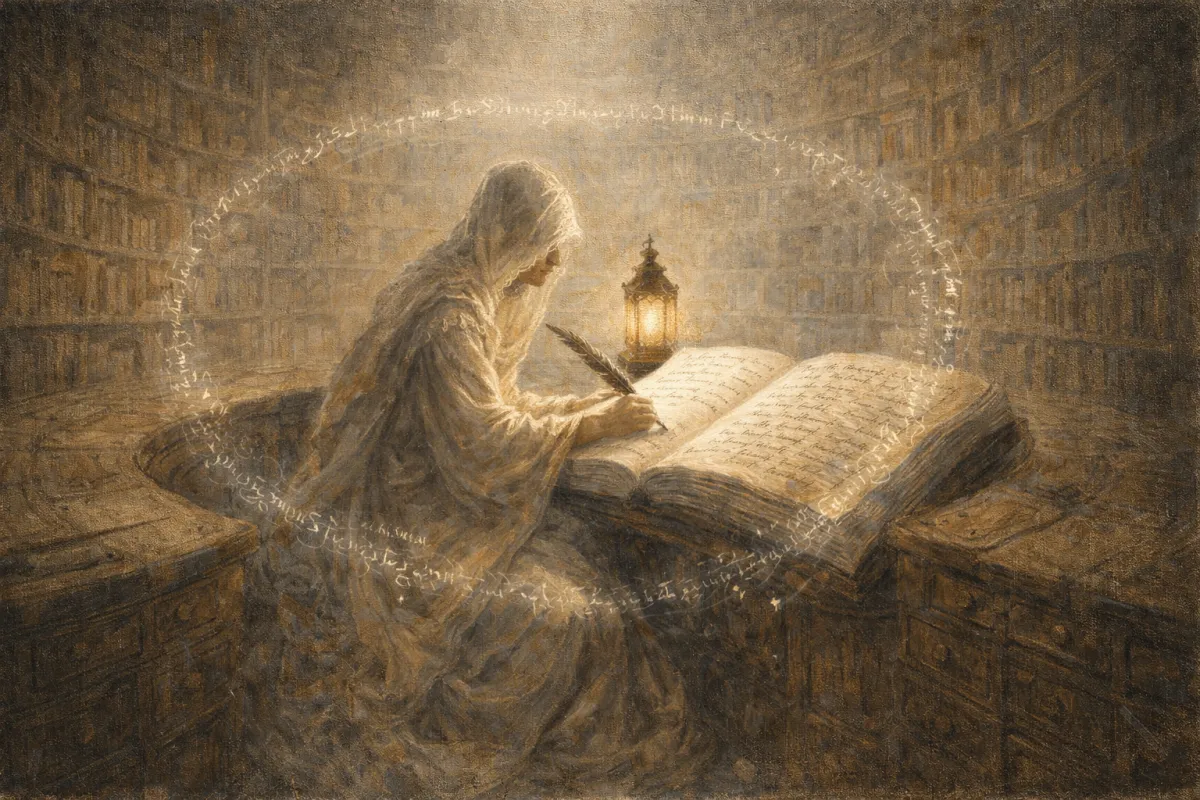
Sutir, the Silent Scribe, is the final major child of Aurion and Aurah and the keeper of memory, knowledge, and continuity. As the Silent Witness, he does not shape the world through force, but through observation, recording, and preservation. He governs the stars, the written word, and the enduring structure of truth that exists beyond the rise and fall of empires. To his followers, existence itself is fleeting, but what is recorded becomes eternal. Sutir represents the quiet power of knowledge—the understanding that while gods may create and kings may rule, it is memory that defines what truly remains.
Minor Deities of the Aurionic Pantheon
While the major gods shape the foundations of existence, the minor deities of the Aurionic Pantheon govern the subtler forces of life—those felt in passing moments, shifting fortunes, and the quiet spaces between greater powers. They are invoked in daily rituals, regional traditions, and personal prayers, often holding deeper influence over mortal lives than the distant, overwhelming presence of the greater gods.
Though lesser in origin, they are no less real. And in some corners of the Empire, they are far more feared.
Table of Contents
Table of Contents
Kymarion
Kymarion, known as the Tide-Bearer, is a lesser child of Kymopoleia, governing the rhythmic pull of the tides and the balance between calm seas and sudden storms. Sailors whisper his name before long voyages, believing he decides whether the ocean will carry them or claim them. Unlike his mother’s silent depths, Kymarion is unpredictable—sometimes gentle, sometimes violently shifting without warning.
Table of Contents
Elyra
Elyra, the Hearth-Bloom, is a gentle spirit of domestic life said to arise from the union of Aurah and Foraoise. She governs warmth, family, and the fragile peace found within the home, making her one of the most widely prayed-to deities among common people. It is believed that a well-kept hearth is a sign of her blessing, while a cold one invites misfortune.
Table of Contents
Valdyr
Valdyr, called the Iron Oath, is a minor god of loyalty, contracts, and unbreakable vows, often associated with both Aurion and Vetr. He is invoked during treaties, marriages, and blood-oaths, where his presence is said to bind words into fate itself. To break an oath sworn in his name is believed to bring slow and inevitable ruin.
Table of Contents
Serephine
Serephine, the Veil of Mercy, is a minor goddess of forgiveness, healing, and quiet absolution, often revered as a servant or reflection of Aurah. She is prayed to in moments of grief, guilt, and reconciliation, where her presence is said to soften hardened hearts. Temples dedicated to her are rare, but her name is spoken often in whispers.
Table of Contents
Tharos
Tharos, the Ember Judge, is a lesser manifestation of Aurion, representing the lingering judgment that follows revelation. He is believed to govern the consequences of truth—the slow burn after the light has exposed what lies beneath. In some regions, he is feared more than Aurion himself, for his justice is patient and unavoidable.
Table of Contents
Nyrix
Nyrix is a shadowed figure within the domain of Sutir, said to exist in the silence between recorded truths. He governs secrets not yet written, forgotten knowledge, and the unease of things almost remembered. Scholars debate whether Nyrix is truly divine or simply a poetic expression of uncertainty—but they still leave offerings to him nonetheless.
Table of Contents
Brakka
Brakka, the Stone-Breaker, is a minor god of labor, endurance, and physical strength, often revered alongside Grom. Miners, builders, and soldiers invoke his name when pushing their bodies beyond natural limits. He is said to favor those who endure hardship without complaint, granting strength only to those who prove worthy of it.
Table of Contents
Liora
Liora, the First Light of Love, is a delicate and often misunderstood figure tied to Sarab. She governs affection, longing, and the beauty found in fleeting connection, representing love in its most hopeful form. Unlike Sarab’s complex illusions, Liora embodies the simple belief that even temporary bonds can hold eternal meaning.
Table of Contents
Eryndor
Eryndor, the Root-Bound Warden, is a guardian spirit of ancient groves and sacred lands, born from the will of Foraoise. He is believed to protect places untouched by empire, ensuring that the balance of nature is not violated without consequence. Travelers who disrespect the land often speak of unseen forces guiding them astray.
Table of Contents
Velkar
Velkar, the Drowned Silence, is a haunting minor god associated with Kymopoleia, representing the final stillness beneath the waves. He is not worshipped openly, but feared by sailors and whispered of in mourning rites for those lost at sea. It is said that those claimed by Velkar are never truly gone—only kept.
𖤓 NOTICE OF IMPERIAL ACCESS 𖤓
This digital codex is maintained by the Silent Scribes of the Aurionic Lyceum. All records, genealogies, and maps contained herein are the property of the Archive of Ichnusa and are preserved for the eyes of the Imperial Household and authorized scholars. By proceeding, you acknowledge the sanctity of the "Silent Truth." May Sutir guide your quill.
Direct all inquiries to the Office of the Grand Maester.
Copyright © 2026 Brilliance Entertainment. All rights reserved.